
Water3 min read
How to stop frozen and burst pipes this winter
When water freezes, it expands. That pressure can split a pipe — and when it thaws, water pours into walls, ceilings and floors. Most burst pipes happen in the coldest week of the year.
Before the cold hits
- Disconnect garden hoses and shut off outside faucets from inside.
- Insulate pipes in the basement, garage, attic and crawl spaces.
- Seal drafts near pipes, like gaps around dryer vents and cable holes.
- Find your main water shut-off valve and make sure it turns.
On very cold nights
- Keep the heat at 55°F or higher, even if you're away.
- Open kitchen and bathroom cabinet doors so warm air reaches the pipes.
- Let faucets on outside walls drip slowly.
If a pipe is frozen
Low or no water from a faucet is the first sign. Keep the faucet open and warm the pipe slowly with a hair dryer or space heater kept at a safe distance. Never use an open flame.
If a pipe bursts
- Shut off the main water valve right away.
- Turn off power to the wet area if you can do it safely.
- Take photos for your insurance.
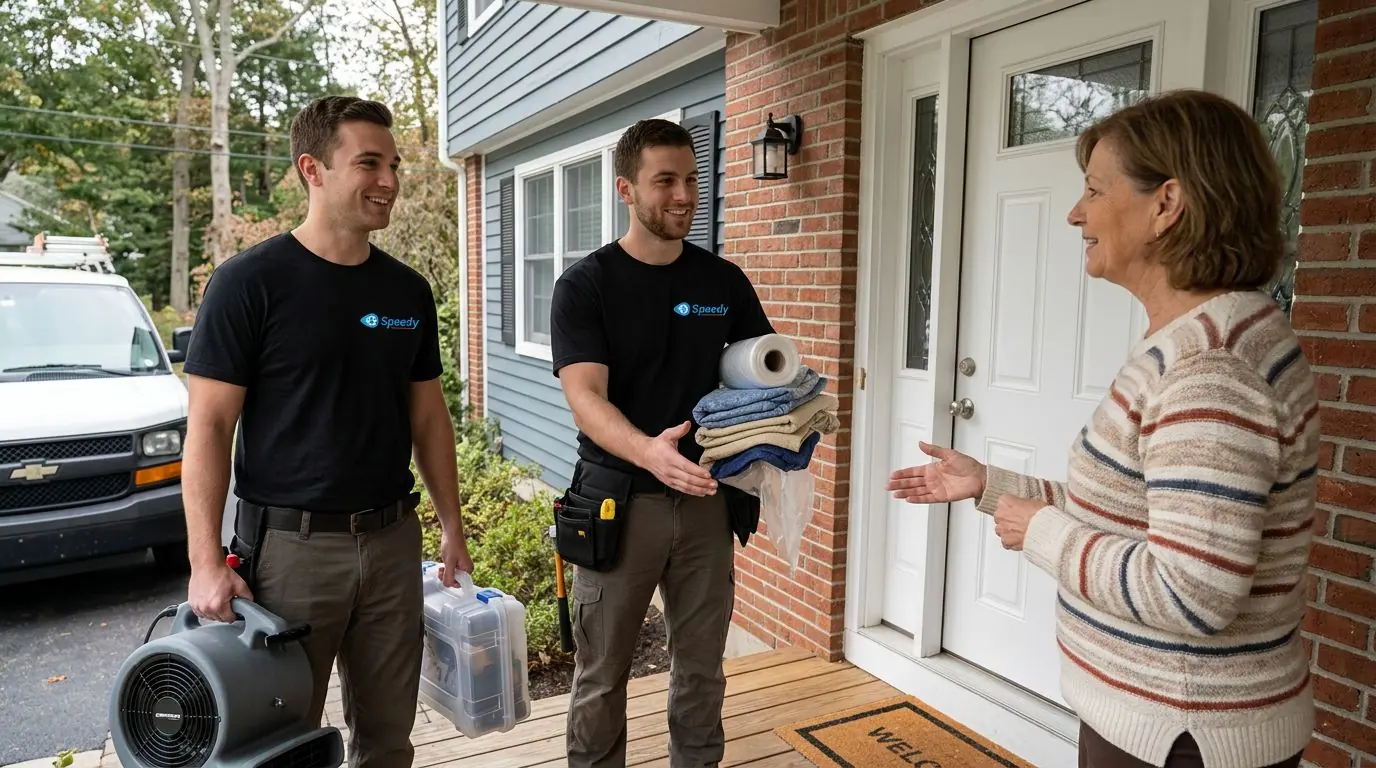
- Call us — we'll extract the water and dry the walls and floors before mold starts.