
Water damage: what to do in the first 24 hours
Water moves fast. It soaks into floors, walls and furniture within minutes, and mold can start growing in as little as 24 to 48 hours. What you do in the first day makes a big difference.
1. Stay safe first
- If water is near outlets, cords or the electrical panel, do not walk through it. Turn off power only if you can reach the panel from a dry spot.
- Watch for sagging ceilings. Wet drywall is heavy and can come down.
- If the water smells like sewage, keep kids and pets away from it.
2. Stop the water
Find your main water shut-off valve and close it. It is usually where the water line enters the house, often in the basement or near the water heater. In an apartment, tell your building super right away.
3. Take photos before you move anything
Photos and short videos of the water, the rooms and damaged items help with an insurance claim later. Take them before you start cleaning up.
4. Move what you can
- Lift furniture off wet carpet and put foil or wood blocks under the legs.
- Move rugs, papers, photos and electronics to a dry room.
- Open windows if the weather allows to let damp air out.
What not to do
- Don't use a household vacuum on water — it's an electric shock risk.
- Don't turn on ceiling fans or lights under a wet ceiling.
- Don't wait for things to "air dry." Water hides under floors and inside walls, where you can't see it.
Why professional drying matters
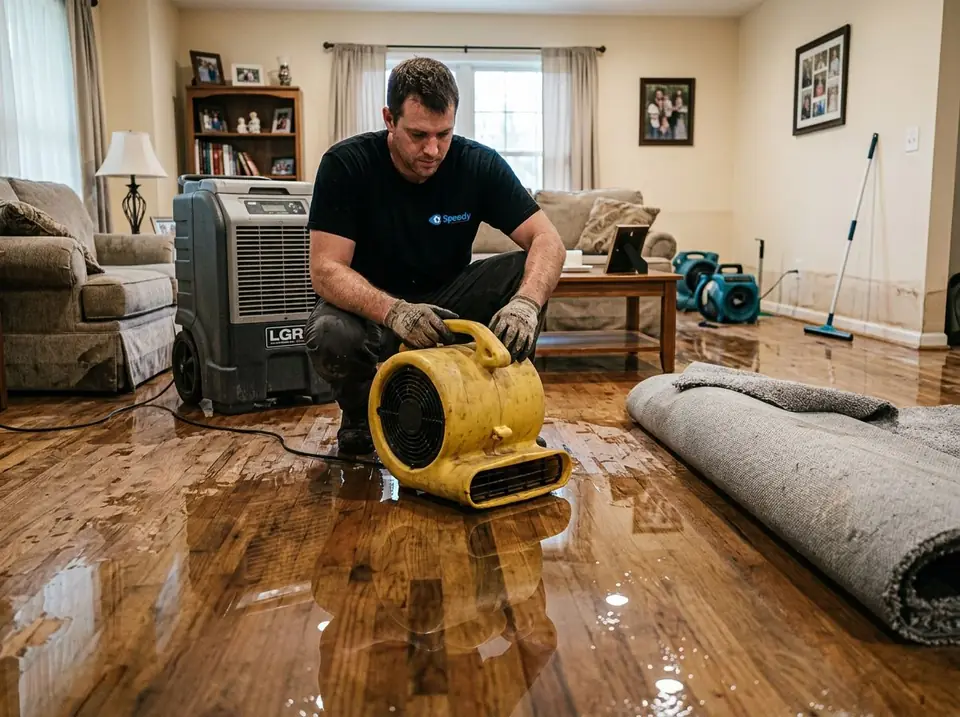
A floor can look dry on top while the subfloor and wall cavities are still wet. We use moisture meters, dehumidifiers and air movers to dry the hidden spots and check them until the numbers are back to normal. That is how mold gets stopped before it starts.